Hanwha Group and Hanwha Qcells corporate social responsibility
We support initiatives in areas such as social welfare, arts and culture, public services and international aid. Led by the Hanwha Social Responsibility Center, more than 70 workplaces in Korea and around the world participate in activities that support local communities and social initiatives.

22.02.2022
The UK’s first electric aircraft charging point was installed at an East Anglian airfield for NUNCATS, a Community Interest Company (CIC) that aims to support remote communities using electric light aircraft. The charging unit was installed by renewable energy developer Renenergy for NUNCATS (No Unnecessary Novelty, Community Air Transport Systems).
The hangar is equipped with 33 Q.PEAK DUO L-G8 Qcells solar modules, which generate solar electricity that can be used to support the charging of electric aircraft.
05.06.2019
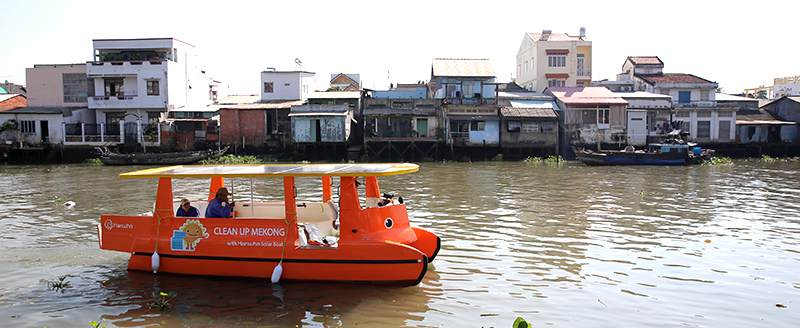
To mark World Environment Day, Hanwha initiated the “Clean Up Mekong” campaign in Vinh Long province in cooperation with the Vietnamese Environmental Authorities and the Global Green Growth Institute (GGGI). The aim of the campaign is to remove refuse and pollutants from the Mekong River. A key element of the clean-up initiative is the solar-powered boat provided by Hanwha. Equipped with Hanwha Qcells Q.PEAK solar modules, the boat collects refuse from the river using solar-generated electricity during operation.
09.01.2018
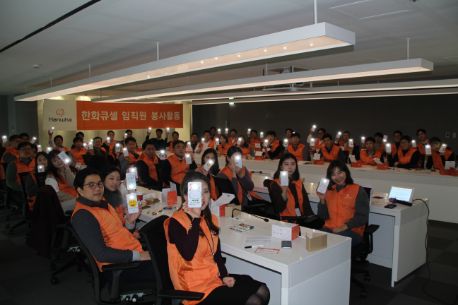
‘Lighting Children’ is a campaign designed to support children living in regions with limited access to energy. The campaign was organised by the Miral Welfare Foundation (Miral), a non-profit organisation committed to the social inclusion of vulnerable groups, particularly people with disabilities.
Hanwha Qcells employees participated in the campaign by making solar lanterns for children who need reliable lighting for everyday activities. Hanwha Qcells hopes that the lanterns can help improve conditions for studying and reduce the need for fuel-based lighting.
31.10.2016
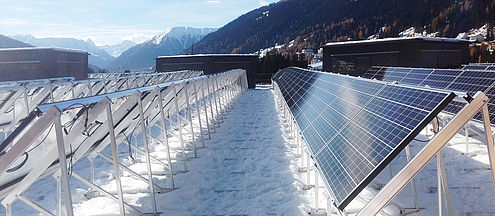
The World Economic Forum, held annually in Davos, Switzerland, addresses global issues including energy and environmental challenges. Hanwha Qcells donated solar modules with a total capacity of 340 kW for installation at the World Economic Forum Congress Center in Davos. The system generates electricity from solar energy and is estimated to reduce CO₂ emissions associated with electricity consumption by around 20 tonnes per year.